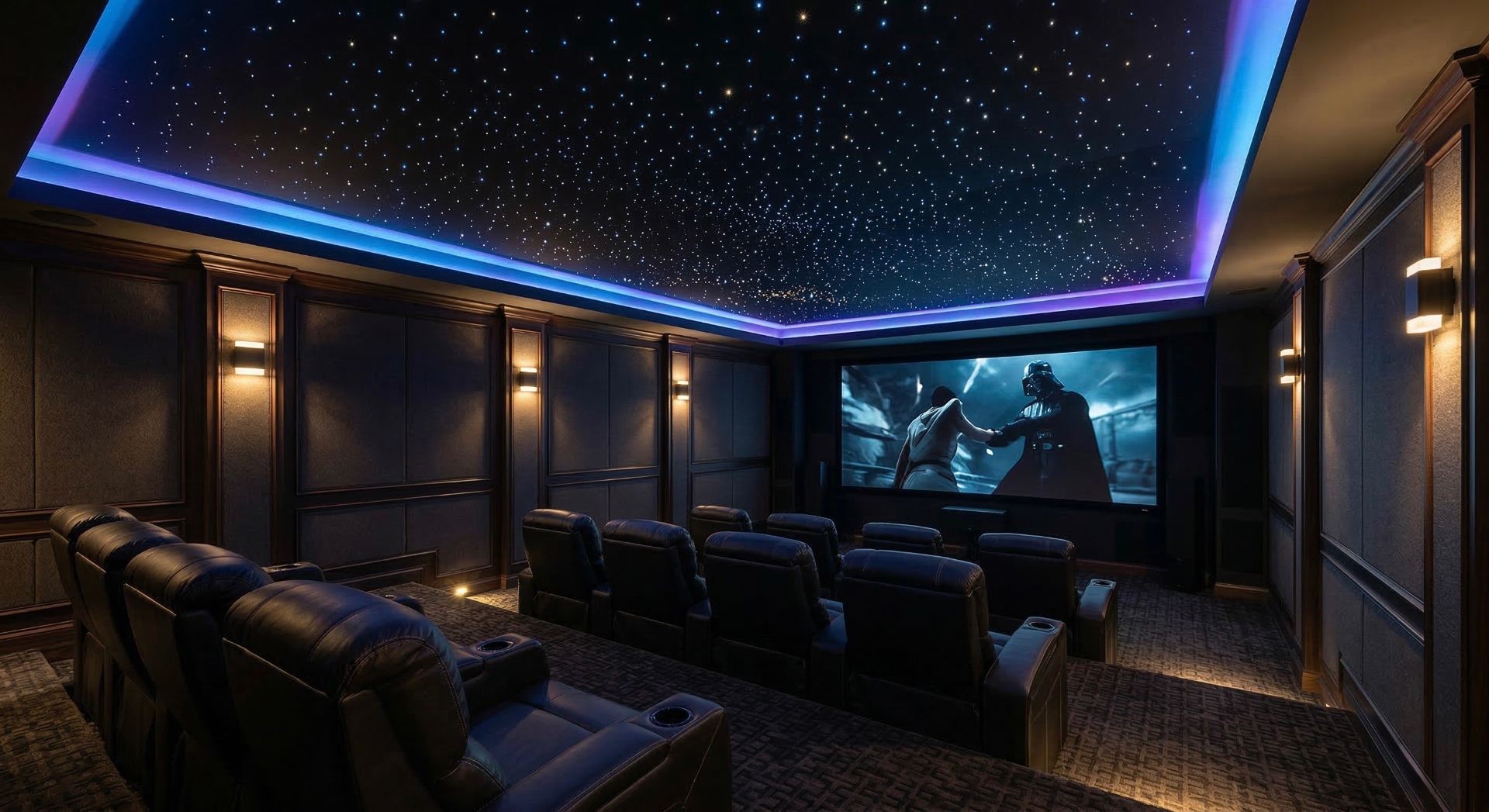
Introduction
The seamless, cinematic ceiling system for modern luxury home theaters.
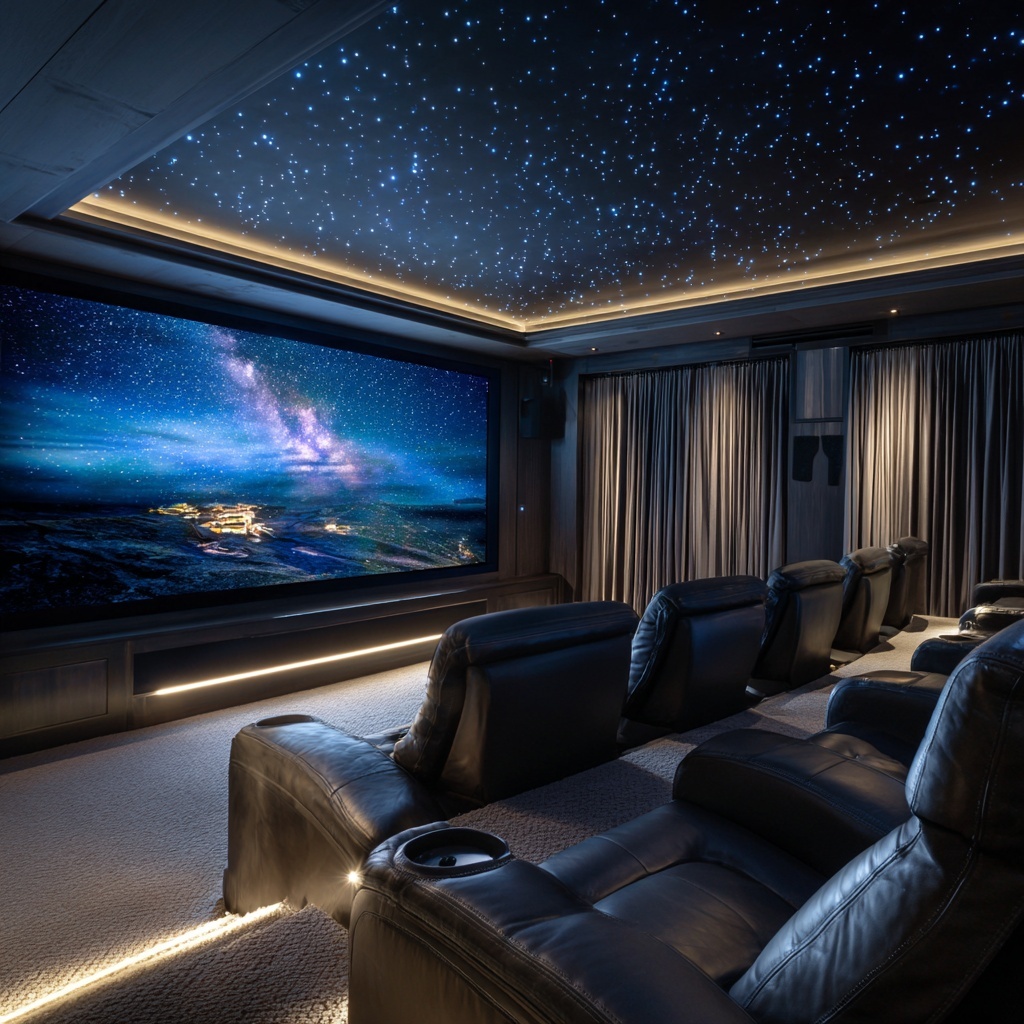
A starlight stretch ceiling pairs two of the most refined technologies in modern interior design: a tensioned, seamless membrane ceiling and a precision fiber-optic lighting system. The result is a ceiling that reads as architectural by day — clean, matte, perfectly flat — and as a private night sky on demand.
Stretch ceilings are uniquely suited to home theater design. They eliminate visible seams, screws, and panel lines. They support acoustic micro-perforation. They host cove lighting, RGB scenes, and luminous backlighting in a cavity only 1.5 to 3 inches deep. And — unlike drywall — they can be tailored exactly to a designer's star pattern, shooting-star choreography, and constellation layout.
What follows is the 2026 step-by-step guide our team uses on luxury theater projects across Palm Beach, South Florida, and select destinations nationwide.
Step 01
Plan the Theater Ceiling Layout
Every starlight theater begins on paper. Room dimensions, soffit geometry, projector throw, screen height, and seating tiers all influence where stars fall, where coves glow, and how the ceiling reads from each seat.
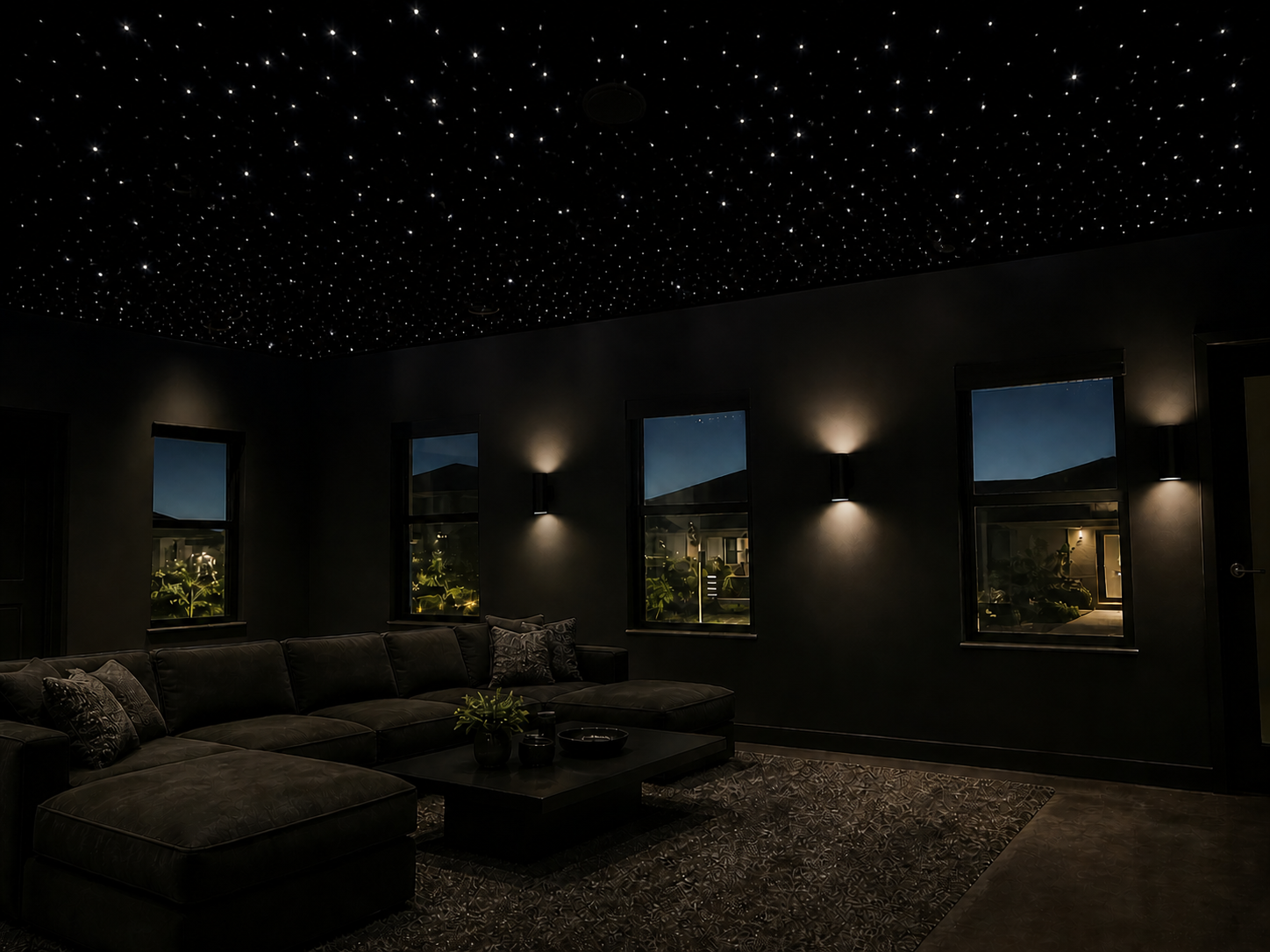
- Room Dimensions
- Document length, width, and finished ceiling height — including any raised starlight tray sections.
- Ceiling Geometry
- Map soffits, flush coves, and architectural drops that frame the star field.
- Viewing Angles
- Plan star concentration to favor the seats — not the empty corners.
- Projector & Screen
- Coordinate ceiling-mount locations and matte black zones near the screen.
- Seating Layout
- Reserve cove lighting and step lighting to follow the seating tiers.
- Acoustic Treatment
- Decide which ceiling zones use acoustic micro-perforated membrane.
Step 02
Choose Star Density and Effects
Star density defines the entire mood of the theater. A sparse field reads as quiet and architectural. A dense field reads as a realistic night sky. Shooting stars and constellations introduce motion and personality.
Sparse Field
200–500 stars. Quiet, architectural, refined.
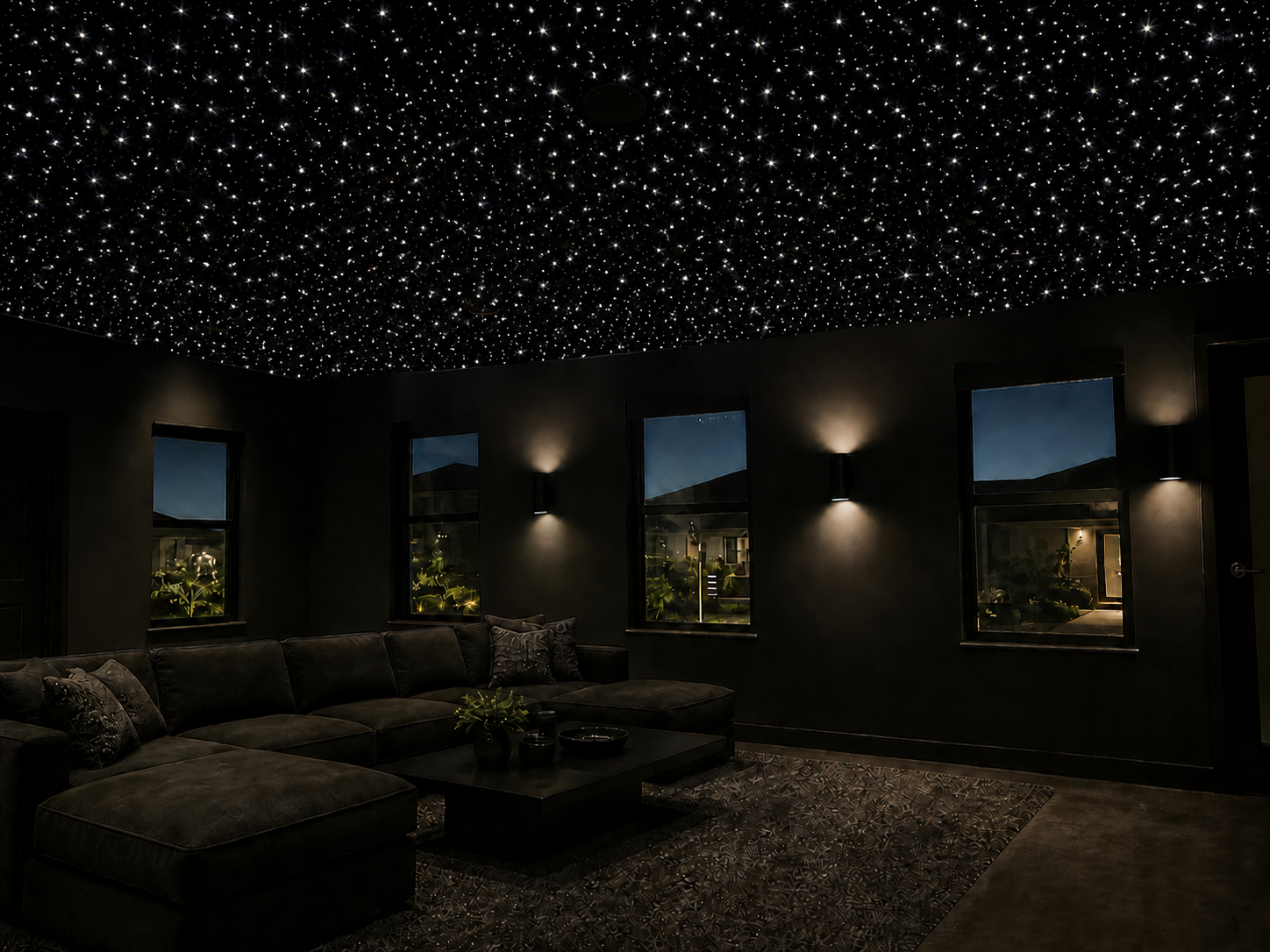
Dense Field
1,500–3,000+ stars. Immersive, cinematic, realistic.
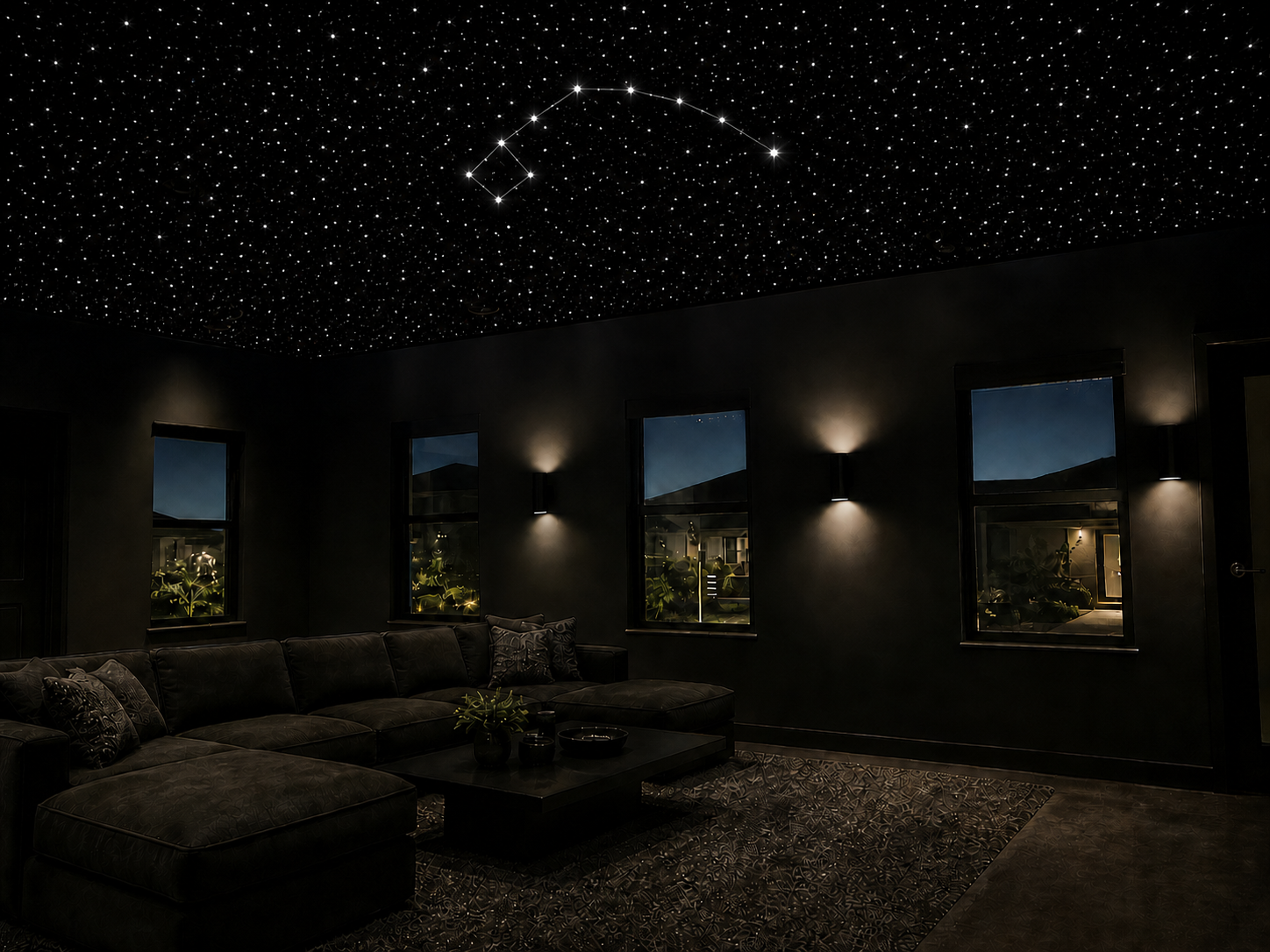
Constellations
Mapped to real or custom celestial patterns.
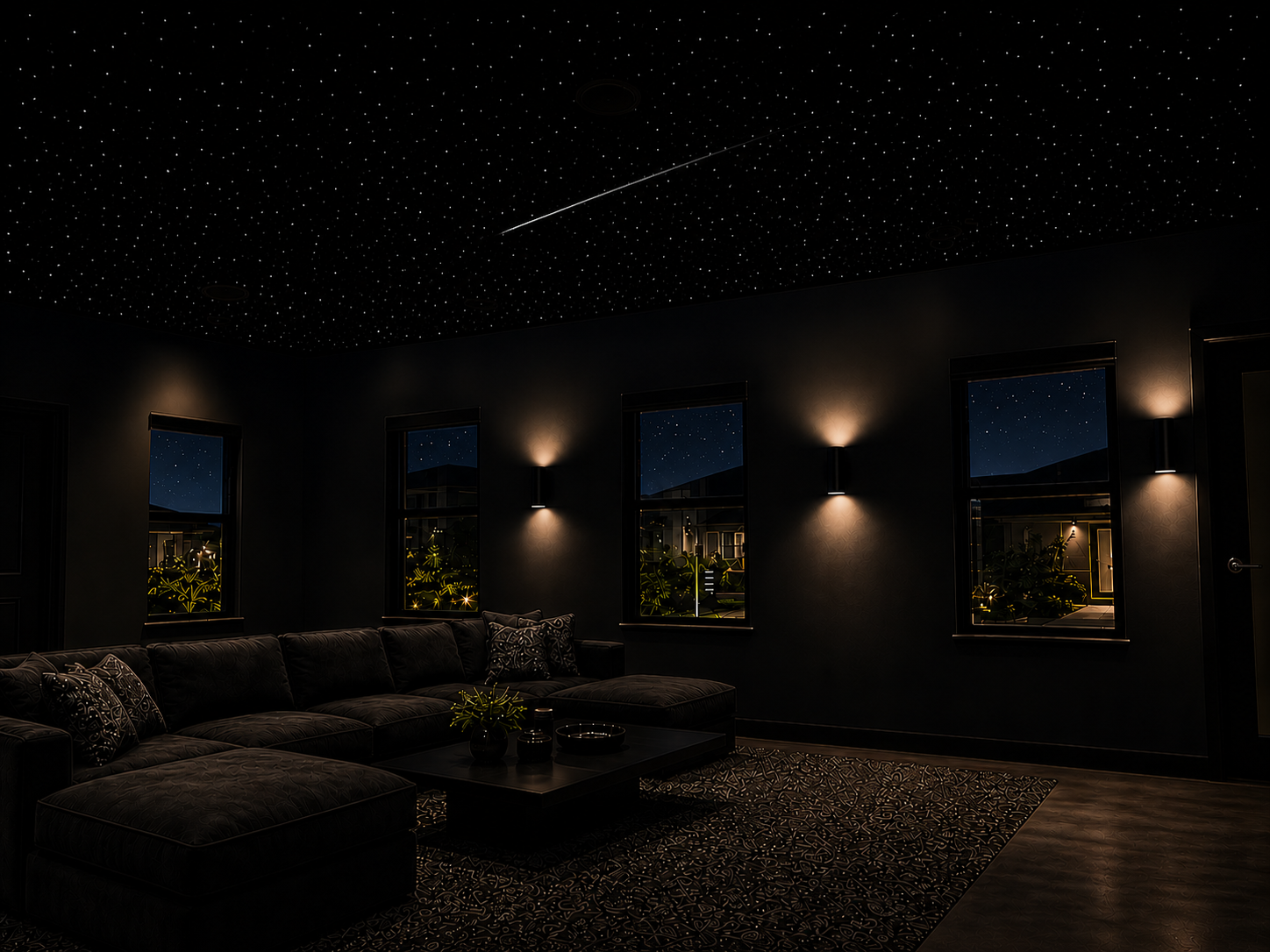
Shooting Stars
Meteor channels with sequenced choreography.
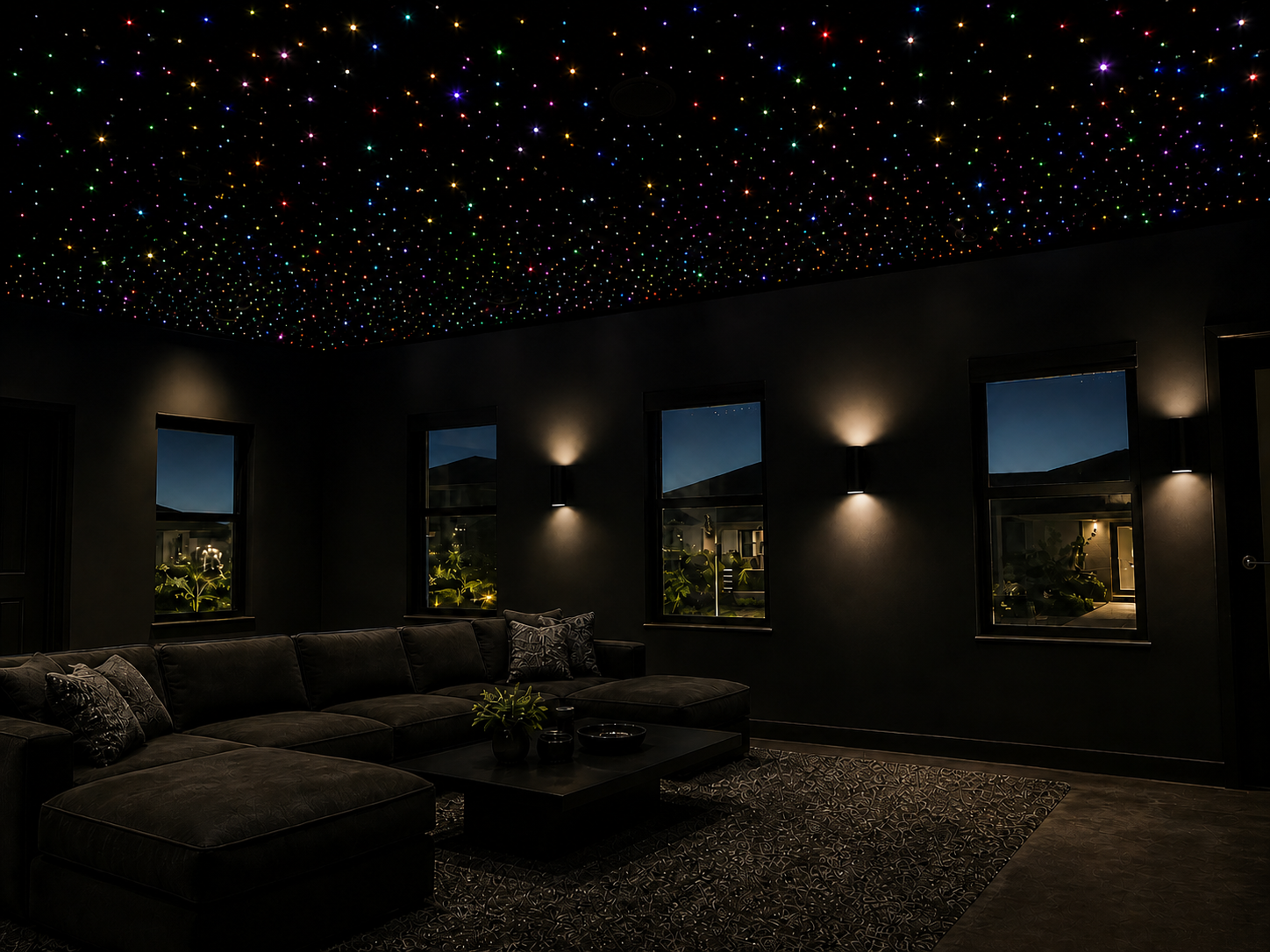
RGB Stars
Color-tuneable accents and twinkle scenes.
Layered Depth
Mixed fiber sizes for true depth perception.
Step 03
Plan Lighting and Control Systems
A premium theater is defined by its scenes, not its switches. Cove lighting, step lighting, RGB accents, and the star engine itself are unified under a single control system before any wiring begins.
Cove Lighting
Soft architectural perimeter glow on warm dimmers.
RGB Scenes
Color-tuned star and cove combinations per scene.
Dimmer Zones
Separate zones for screen wall, ceiling, and aisles.
Smart Integration
Lutron, Crestron, Control4, Savant, Josh.ai.
Theater Presets
Movie · Pause · Credits · Lights Up · Clean.
Single Interface
iPad or wall keypad — no stack of remotes.
Step 04
Determine Driver and Engine Locations
Fiber-optic engines, LED drivers, and RGB controllers all need to be accessible for service. Their placement also dictates how long the fiber harness must be and how clean the signal stays at the ceiling.
AV Closet Placement
Most engines live in the AV rack — centralized, ventilated, and serviceable from outside the theater.
Mechanical Room
When the AV closet is full, an adjacent mechanical room with cool airflow is the next best choice.
Local Hidden Engines
Small engines can be tucked into accessible service hatches when fiber runs need to stay short.
Maintenance Access
Every engine is documented and labeled so a future swap takes minutes, not days.
Step 05
Choose a Qualified Installer
Starlight theater work sits at the intersection of stretch ceiling craftsmanship, fiber-optic engineering, low-voltage lighting, and AV control. A qualified installer is fluent in all four.
- Proven luxury home theater portfolio
- Hands-on fiber-optic engine and harness experience
- Integrated cove, RGB, and acoustic membrane work
- Lutron, Crestron, Control4, Savant integration fluency
- Reference projects and clean, organized job sites
Palm Beach Stretch Ceilings — Service Areas
Step 06
Install the Track System and Infrastructure
The build begins with the perimeter track, soffit framing, and cable infrastructure. Nothing is improvised — every cove, every reinforced platform, every conduit run has already been mapped on the shop drawings.
- 1
Perimeter Track
Anchored cleanly to walls and soffits to define the membrane plane.
- 2
Soffit & Cove Framing
Cove returns, raised tray ceilings, and flush coves are pre-built.
- 3
Reinforced Platforms
Mounts for projector, speakers, and any ceiling fixtures.
- 4
Cable Pathways
Low-voltage, fiber, and AV pathways are separated and labeled.
- 5
Pre-Stretch Inspection
Cavity is dust-free, dry, and ready to receive the membrane.
Step 07
Route Fiber Optics and Lighting Systems
This is the most meticulous stage of the build. Thousands of fibers, dozens of meteor channels, and every RGB run are sorted, labeled, and pre-organized before a single strand reaches the membrane.
Fiber Sorting
Strands grouped by length, diameter, and target zone.
Shooting-Star Channels
Meteor runs labeled, sequenced, and tested for trajectory.
Constellation Mapping
Specific fiber bundles reserved for designed constellations.
RGB & Cove Wiring
Color drivers and dimming circuits routed and verified.
Luminous Accents
Backlit ceiling zones pre-wired for translucent membrane areas.
Cable Management
Every harness organized — clean cavities mean clean ceilings.
“Star quality is decided long before the membrane is stretched. It is decided in how the fiber is organized.”
Step 08
Stretch and Install the Ceiling Membrane
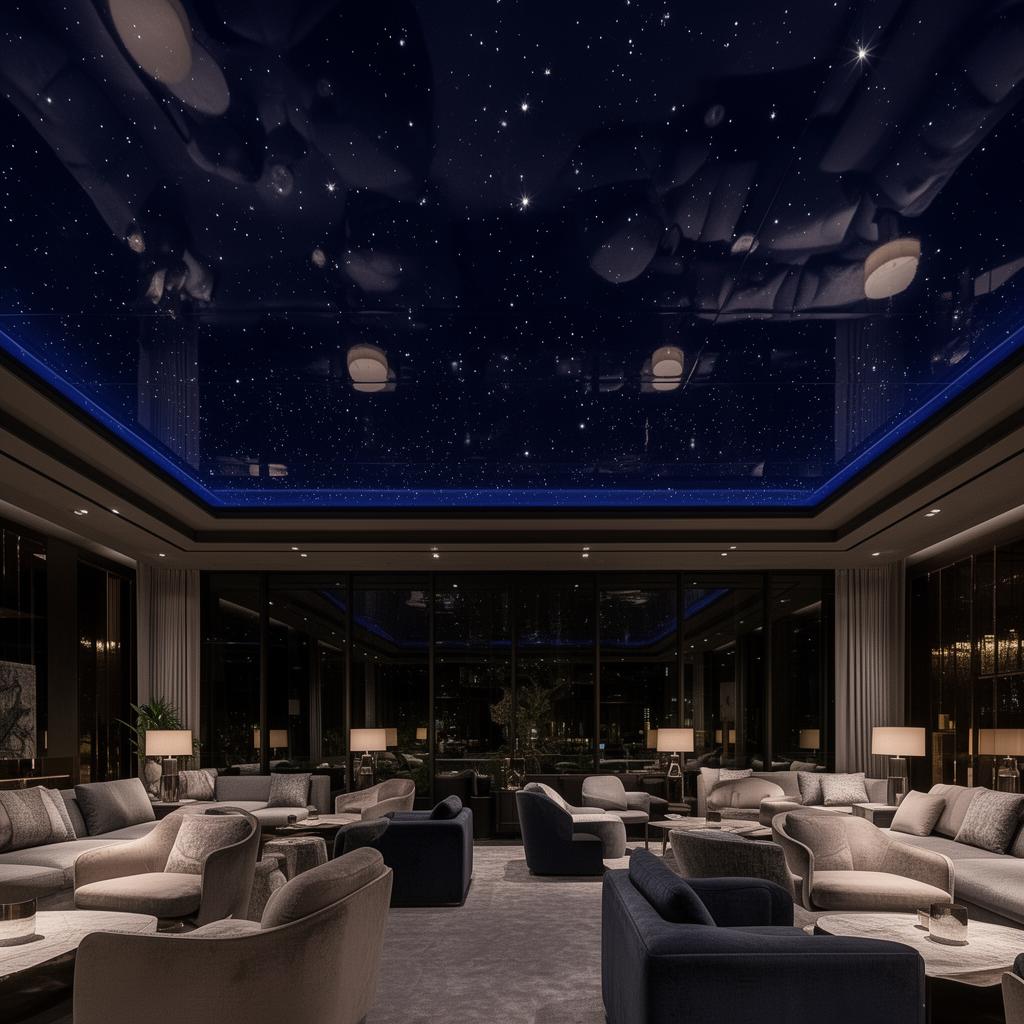
The membrane is heated, tensioned, and locked into the perimeter track. For starlight theaters, a matte-black or deep-charcoal PVC is used to eliminate projector reflection and create the void from which stars emerge.
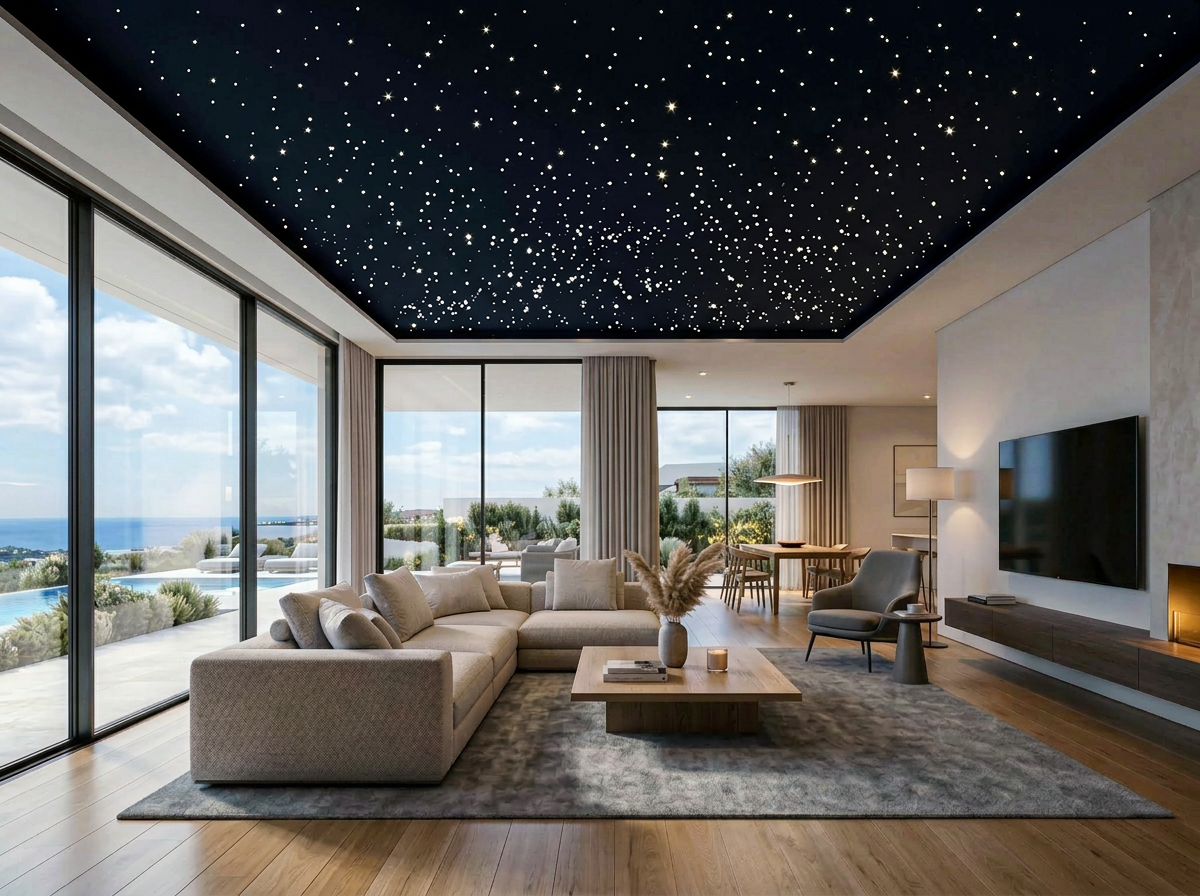
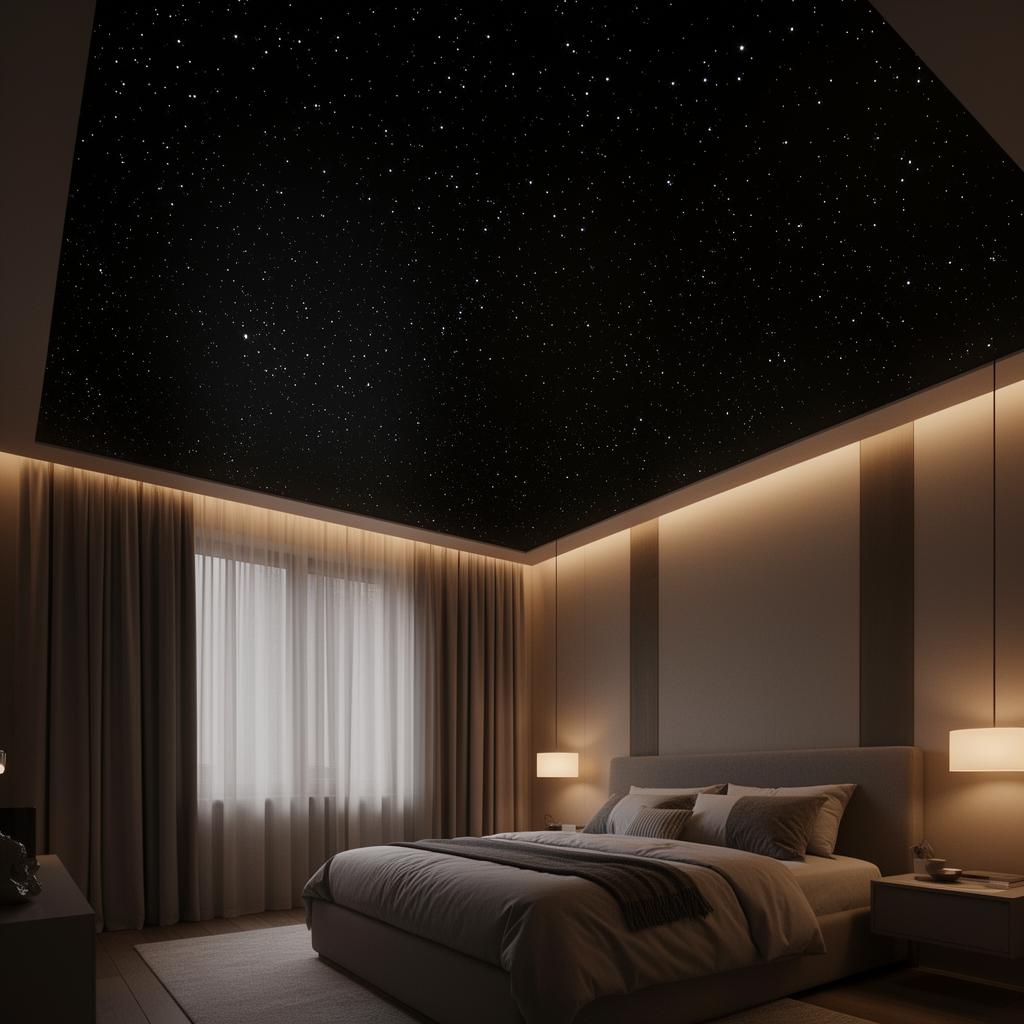
Matte Black
Deep Navy
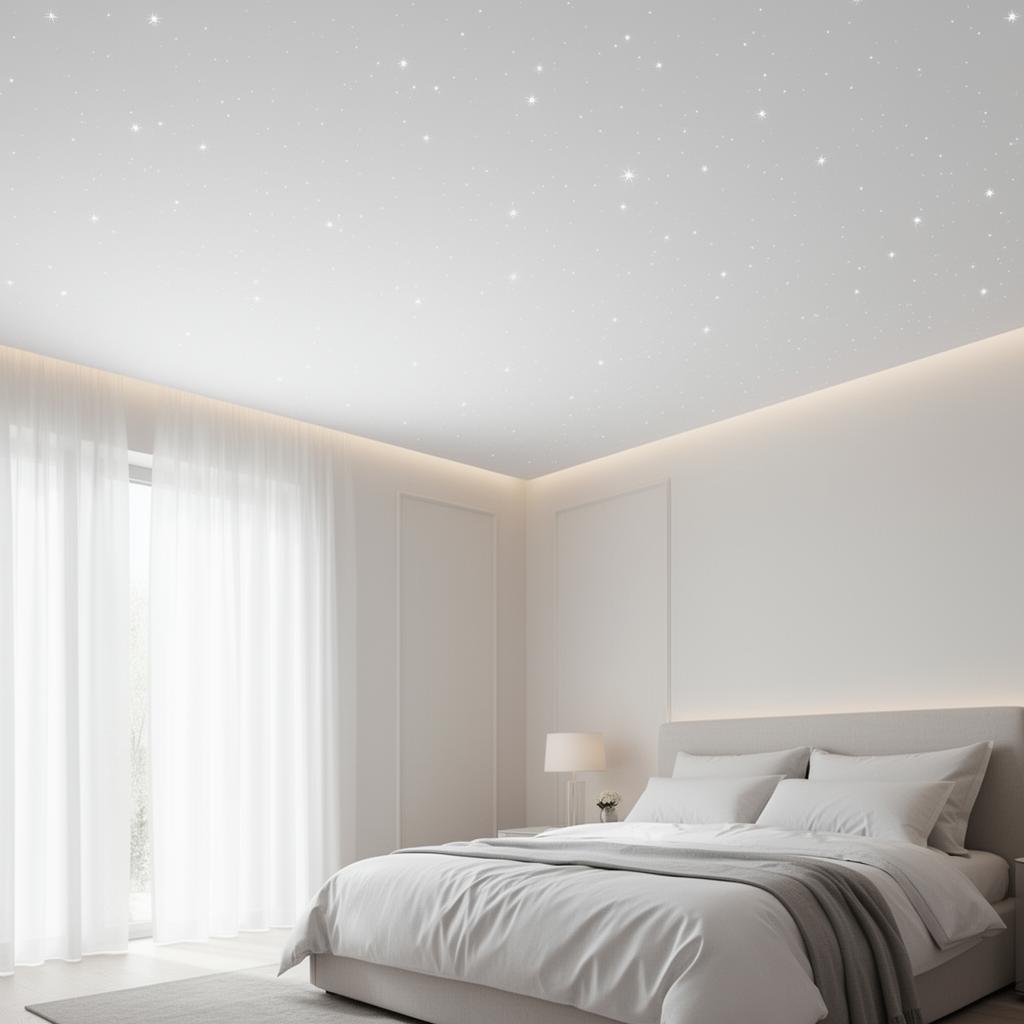
Soft White Field
Once tensioned, fiber strands are punched precisely through the membrane at pre-mapped coordinates — the moment the night sky is born.
Step 09
Trim, Secure, and Test Fiber Optics
Every fiber is trimmed flush, secured behind the membrane, and tested against the master star map. The pace is deliberate — this is where craftsmanship separates a finished theater from a luxury one.
Fiber Trimming
Each strand cut flush to the membrane for a true pinpoint of light.
Secure & Seal
Fibers locked into the cavity to prevent drift over time.
Star-Field Audit
Engine cycled while every star is visually verified.
Shooting-Star Test
Each meteor channel run end-to-end and timed.
Step 10
Program the Lighting Control System
Scenes are written, named, and tuned with the client in the room. A premium theater is judged in the dark — by how naturally it transitions from lobby to feature to credits.
Scene Library
Movie · Pause · Intermission · Lights Up · Clean · Showcase.
RGB Mapping
Star color, cove color, and accent color tuned per scene.
Shooting-Star Sequencing
Timing, frequency, and trajectory choreographed.
Smart Home Hand-Off
Scenes available to Lutron, Crestron, Control4, Savant.
Step 11
Final Testing and Theater Calibration
Final calibration brings every system into balance — star brightness, cove warmth, dimmer ranges, scene transitions, and a clean walkthrough with the client and AV integrator.
- Star-field brightness balanced across the entire ceiling
- Cove and accent lighting tuned to scene presets
- Every keypad, app, and remote verified
- Site cleaned, vacuumed, and photo-documented
- Client training session — how to live with the theater
Step 12
Frequently Asked Questions
Related reading: starlight ceilings, private theater project, stretch ceiling finishes.
Complimentary Download
Free Download — 2026 Home Theater Starlight Ceiling Planning Guide
A premium, designer-grade PDF — theater inspiration, layout examples, star density references, cove lighting diagrams, control system overviews, planning checklists, FAQ, and direct contact.
- Star density and effect references
- Lighting & control system diagrams
- Theater planning checklists & FAQ
Palm Beach Stretch Ceilings
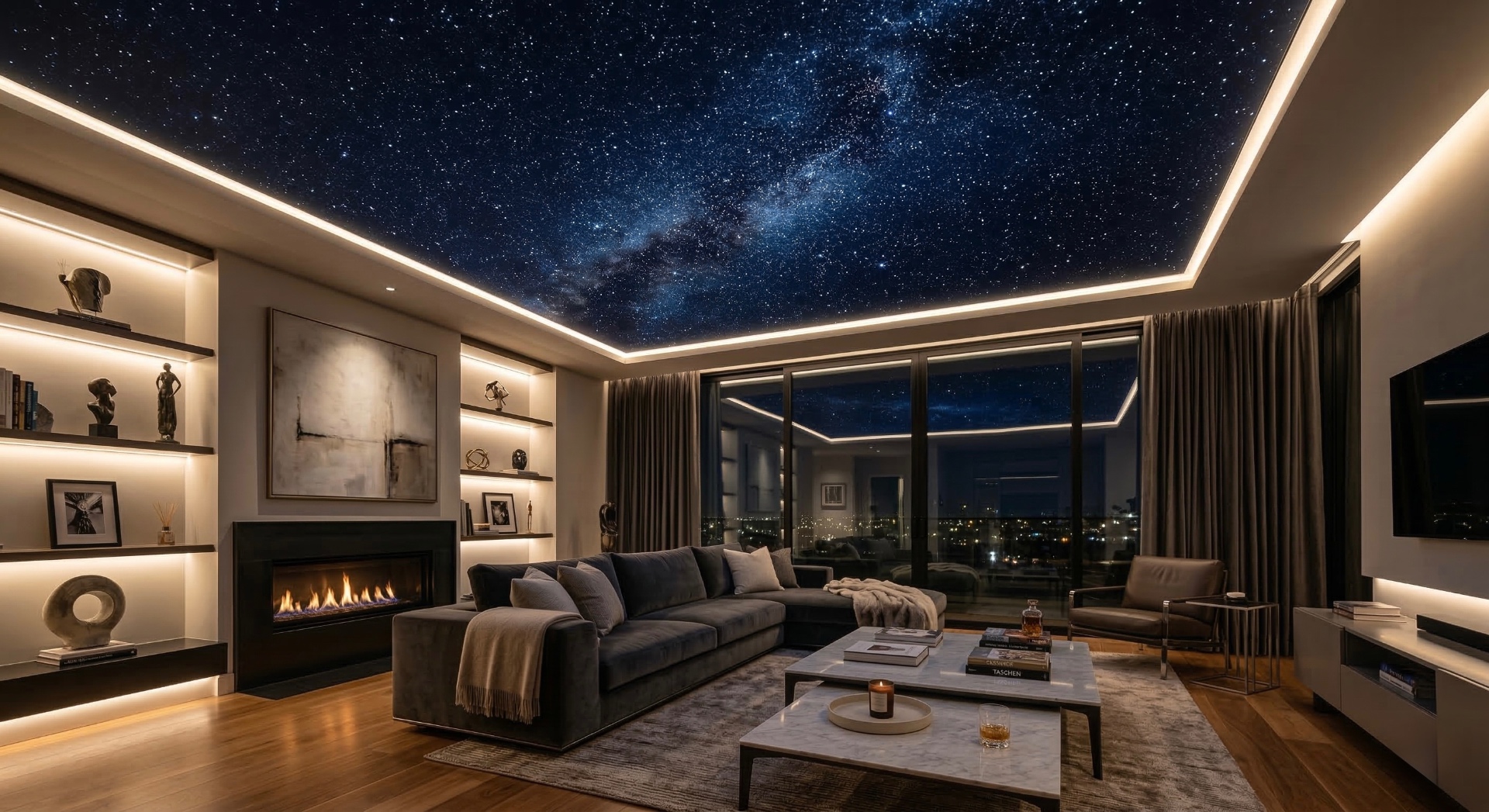
Transform Your Home Theater Into an Immersive Cinematic Experience
Modern starlight stretch ceiling systems combine architectural lighting, seamless finishes, and luxury theater design into one integrated ceiling solution.